

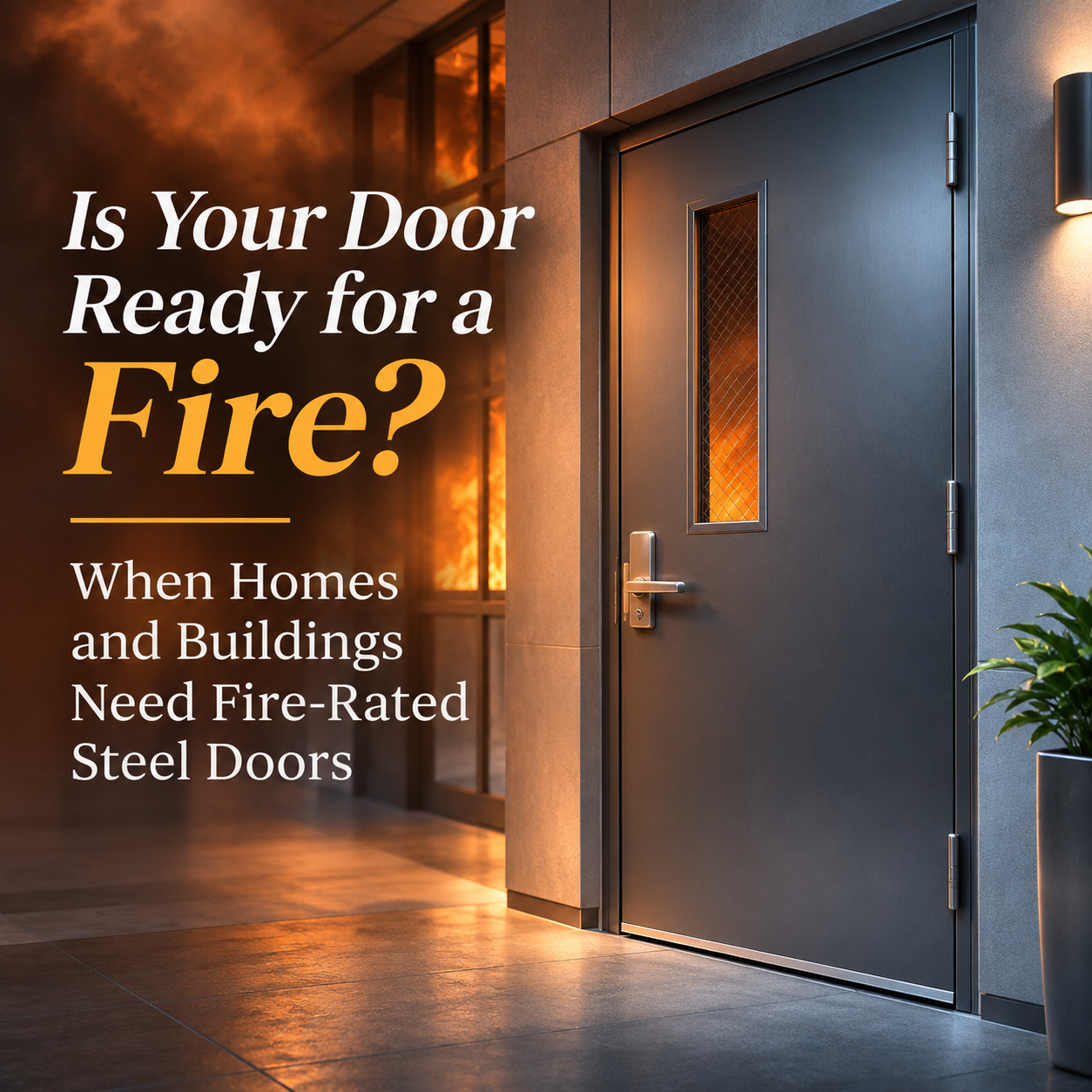
Fire safety is something most homeowners rarely think about until an emergency happens. We invest in strong walls, modern interiors, security cameras and advanced locking systems. But what about the doors that separate us from potential danger?
If a fire started next door tonight, would your door hold?
During a fire, flames, heat and toxic smoke can spread rapidly through unprotected openings, gaps and passages. A properly installed fire-rated steel door can help slow that spread, protecting escape routes and giving occupants valuable time to evacuate.
Whether you own a home, manage an apartment complex or operate a commercial building, understanding where fire-rated doors are needed is an important step towards better fire safety.
Steel is widely used in fire-resistant door assemblies because of its strength and non-combustible nature.
Unlike conventional combustible materials, steel does not contribute fuel to a fire. Properly engineered steel doors can also offer:
Fire resistance: Certified assemblies help limit fire spread for their tested duration.
Structural strength: Engineered construction supports performance under demanding conditions.
Enhanced security: Robust materials can provide additional physical protection.
Durability: Suitable finishes help resist everyday wear and corrosion.
Low maintenance: Quality steel doors can provide dependable long-term service with proper upkeep.
However, steel can deform under extreme heat. Fire resistance depends on the tested doorset design, insulation and installation not steel alone.
Fire-rated doors are especially worth considering in residential spaces where fire could threaten occupied rooms or escape routes.
Key locations include:
1. Attached garages: A fire-rated door may be required between a garage and living space, depending on applicable building regulations.
2. Kitchens and utility rooms: Areas containing electrical appliances, heating equipment or potential ignition sources may benefit from appropriate fire separation.
3. Apartments and villas: Doors opening into protected common corridors or shared escape routes may require certified fire protection.
4. Multi-storey homes: Where a staircase forms part of a protected escape route, fire-rated doors can help maintain the separation.
Not every residential door must be fire-rated. The correct requirement depends on building design, occupancy, local regulations and fire-safety assessments.
In commercial and institutional buildings, fire-rated doors play an important role in compartmentation—the practice of dividing a building into sections to restrict fire spread.
They are commonly specified for:
Staircases and emergency exits: To protect designated evacuation routes.
Electrical and server rooms: To separate equipment-related fire hazards.
Hospitals and schools: To protect corridors, designated fire compartments and escape routes.
Hotels, offices and shopping malls: To improve fire separation in high-occupancy environments.
Warehouses and industrial buildings: To isolate designated storage, machinery and utility areas.
Commercial kitchens and boiler rooms: To separate higher-risk spaces where required.
Actual ratings and locations must follow applicable building codes and approved fire-safety plans.
Even a certified fire-rated door may lose its effectiveness if damaged or improperly maintained.
Look for these warning signs:
Missing certification: No identifiable fire-rating label or supporting documentation.
Visible gaps: Excessive gaps between the door and frame.
Poor closing: A required self-closing door does not close and latch properly.
Damaged seals: Fire or smoke seals are missing, painted over or deteriorating.
Unsuitable hardware: Hinges, locks or glazing have been replaced with unapproved components.
If any of these issues appear, arrange an inspection by a qualified fire-door professional.
Choosing a fire-rated door involves more than selecting the material or appearance.
Check the required fire rating. A qualified architect or fire-safety consultant can determine the appropriate specification for each location.
Verify certifications. Ask for relevant test reports, product identification and compliance with applicable standards.
Examine the complete assembly. Frames, hardware, seals and any glazed panels should be covered by the approved configuration.
Prioritise professional installation. Incorrect fitting, excessive gaps or unapproved modifications can compromise tested performance.
Plan regular inspections. Check closing mechanisms, seals and hardware throughout the door's service life.
The Bureau of Indian Standards specifies detailed requirements covering fire-door classifications, tested configurations and associated hardware.
Myth 1: Every steel door is fireproof.
Fact: Steel construction alone does not establish a fire-resistance rating.
Myth 2: Fire doors can be kept open for convenience.
Fact: Fire doors designed to remain closed should not be wedged open. Approved automatic hold-open systems are a separate consideration.
Myth 3: Any lock or glass panel can be added.
Fact: Unapproved modifications can compromise the doorset's certified performance.
Myth 4: Fire-rated doors need no maintenance.
Fact: Regular inspection is essential to ensure that door closers, seals and hardware function correctly.
Choosing the right door begins with understanding the safety, security and durability requirements of your property.
Hawaii Doors & Windows offers a selection of steel doors, FRP doors and window solutions for residential and commercial applications.
Homeowners, architects, builders and contractors can explore Hawaii's product range and discuss suitable door options for their projects.
For locations where certified fire resistance is mandatory, always request product-specific fire-test documentation and confirm that the proposed door assembly meets the required specification.
1. Are all steel doors fire-rated?
No. A steel door is fire-rated only when the relevant assembly has been tested and certified for fire resistance.
2. Is a 60-minute fire-rated door enough for a home?
It depends on the door's location and applicable building requirements. Some areas may require a different rating.
3. Can fire-rated doors prevent smoke from entering?
Appropriately specified smoke-control doors and seals can help restrict smoke movement. Fire resistance alone does not automatically establish smoke-control performance.
4. Do fire-rated steel doors require regular maintenance?
Yes. Hinges, door closers, latches, seals and frames should be inspected periodically to maintain proper operation.
A beautiful door creates a welcoming first impression. A properly specified safety door may also help protect lives and property when it matters most.
Take a few minutes to inspect the doors in your home or building. If you are planning construction, renovation or replacement, discuss fire-safety requirements before choosing your door.
Looking for durable steel doors and windows for your home, apartment or commercial project?
Connect with Hawaii Doors & Windows to explore available products, discuss your requirements and request a quotation.
Kerala: +91 87146 52984
Outside Kerala: +91 98956 07750
Email: info@hawaiistore.in
Website: www.hawaiidoors.in
Corporate Office: Opposite Metro Pillar No. 201, NH-47, Muttom, Aluva, Kochi, Kerala – 683106.
Contact information verified against the company's official website.
Hawaii Steel Door
Request a Quote or Consultation


